
Moving people from one place to another is one of the oldest services in the world — and in a dynamic city like Montreal, it has become a finely tuned ecosystem. Whether you are a longtime Montrealer, a student arriving with two suitcases, or a visitor exploring the island for the first time, understanding how passenger transportation works in this city is the first step toward smoother, smarter travel. Think of this page as your map of the territory: it explains the main modes, how they connect, what they cost, and how to choose the right one for each situation.
At its core, passenger transportation is the business and practice of moving people — as opposed to freight — from an origin to a destination, safely and on time. It covers everything from a single taxi ride across the Plateau to a fully managed shuttle operation moving dozens of employees to an industrial park in Laval. While goods logistics focuses on parcels and pallets, passenger transport focuses on something more delicate: schedules, comfort, safety, and the experience of each individual rider.
A useful way to picture the sector is as a layered pyramid. At the base sit public networks like the STM (Société de transport de Montréal) and its bus, métro, and REM connections. In the middle are shared and on-demand services — taxis, ride-hailing, school and corporate shuttles. At the top are specialized services: accessible transport, private chauffeurs, and long-distance connections to Trudeau Airport, Quebec City, or Ottawa.
Montreal offers one of the richest ranges of mobility options in Canada. Each mode has its own logic, its own pricing, and its own ideal use case. Knowing them well helps you build better routes — and avoid costly mistakes.
The STM operates the métro’s four lines and a dense bus network covering nearly every neighbourhood, while the new Réseau express métropolitain (REM) adds light-rail connections to the South Shore, the West Island, and Pierre Elliott Trudeau Airport. For daily commuters, public transit is usually the most economical and predictable option: a single fare costs a few dollars, and monthly passes dramatically reduce the cost per trip.
Montreal’s taxi industry — long associated with names like Taxi Diamond and Taxi Coop — remains a pillar of on-demand transport, now regulated under the province’s framework administered by the Commission des transports du Québec (CTQ). Licensed taxis guarantee trained drivers, insurance coverage, and standardized meters. For airport runs, corporate travel, or late-night rides when the métro is closed, a taxi or private car with chauffeur offers door-to-door comfort.
Platforms such as Uber operate legally in Quebec under the same regulatory umbrella as taxis, and they have become a reflex for many Montrealers. The experience is familiar: open an app, see the price upfront, track the driver. Ride-hailing excels for short urban trips and spontaneous travel, but prices surge during storms, festivals like Osheaga, or events at the Bell Centre.
The practical takeaway: compare before you commit. A taxi ordered by phone or app may, during a surge-pricing window, actually be the cheaper and more predictable option.
When more than a handful of people need to move together, dedicated shuttles become the smart choice. A minibus that seats 15, a coach that seats 50 — these vehicles transform group logistics from a headache into a single reservation. In Montreal, group transport is used constantly for weddings in Old Montreal, corporate events in Griffintown, student excursions to Mont-Tremblant, and conference transfers between hotels and the Palais des congrès.
True passenger transportation includes everyone. Montreal offers paratransit services for riders with disabilities, accessible taxis equipped with ramps, and vehicles that accommodate wheelchairs and walkers. Booking these services usually requires advance notice, so planning ahead is not a suggestion — it is essential. Reputable operators in the city have made accessibility a growing priority, with trained drivers and adapted vehicles.
Rather than memorizing every option, ask four simple questions. Together, they act like a decision filter — the same way a good chef chooses the right knife for each cut.
Consider a concrete example: a family of five arriving at Trudeau Airport with four suitcases wants to reach a hotel near Place-des-Arts. The métro would cost under $20 total but involves two transfers, stairs, and crowded cars. A sedan cannot fit everyone legally. The right answer is a minivan or an SUV taxi from the airport rank — one trip, ample luggage space, roughly comparable in cost to two separate ride-hailing cars.
Pricing models vary more than most travellers expect, and knowing the difference protects your wallet.
A useful rule of thumb: the more predictable your trip, the more likely a fixed fare or pass saves you money; the more spontaneous the trip, the more useful on-demand services become.
Quebec regulates passenger transportation more strictly than newcomers often realize. Licensed operators must hold proper permits, carry commercial insurance, and — for taxis — undergo vehicle inspections and driver screening. When booking any service, three quick checks provide real peace of mind:
These checks take minutes but separate professional operators from improvised ones. In an industry built on trust, that difference is everything.
The sector is evolving quickly, and Montreal sits at the edge of several currents. Electrification is transforming fleets: taxis, buses, and shuttle vehicles are increasingly electric or hybrid, reducing both emissions and long-term operating costs. The REM’s progressive rollout is redrawing commute patterns across the metropolitan region. Meanwhile, digital booking platforms have raised expectations everywhere — riders now assume real-time tracking, transparent pricing, and instant confirmation, whether they hail a cab or reserve a coach.
The most interesting shift, however, is conceptual: passenger transportation is becoming multimodal. The best trips increasingly blend modes — a shuttle to the venue, a transit card for the week, a taxi for the late ride home. Operators and cities alike are learning that the winning model is not a single service, but a connected experience.
Whether you are planning a daily commute, a corporate event, or simply a stress-free airport transfer, the essentials remain the same: know your options, compare with clear criteria, and book with licensed, reputable providers. Montreal’s passenger transportation ecosystem is rich enough that there is always a smart answer — you just need the framework to find it. The articles in this category break down each service in detail, so you can move from understanding the big picture to choosing the perfect ride for your specific need, with total confidence.
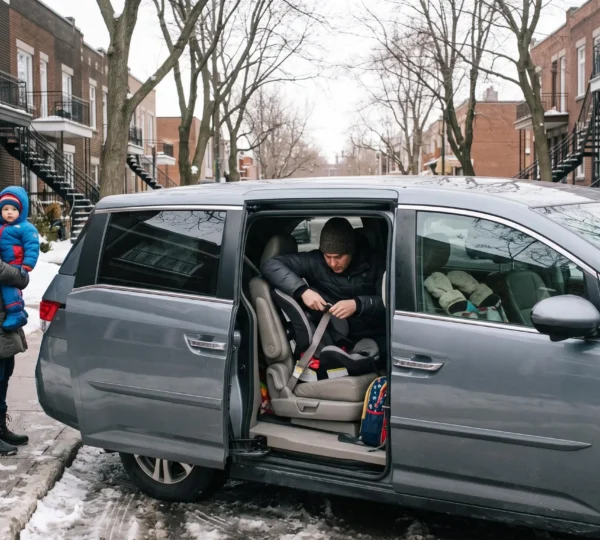
A family outing in Montréal can unravel before the vehicle leaves the curb. The car…
Read more
Booking a private car for the first time in Montréal can feel unnecessarily complicated. One…
Read more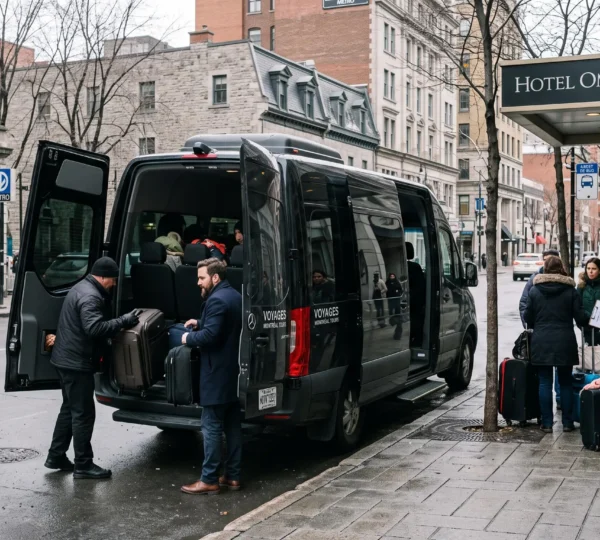
Transporting 12 people across Montréal becomes complicated when passenger capacity, luggage volume and pickup logistics…
Read more
Choosing passenger transportation in Montréal requires more than counting available seats. A vehicle may accommodate…
Read more
A delayed vehicle can turn a carefully planned business trip in Montréal into a missed…
Read more